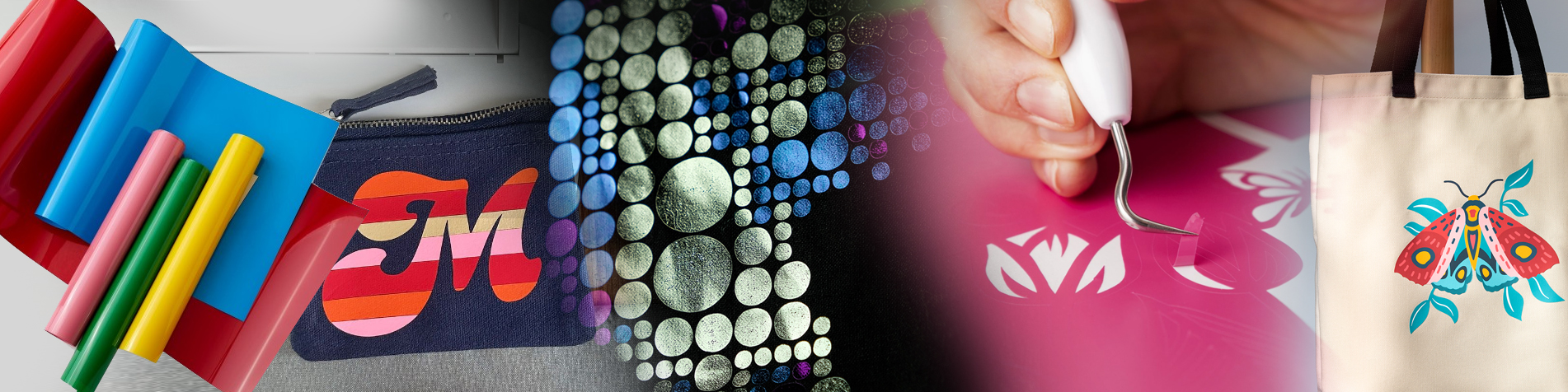
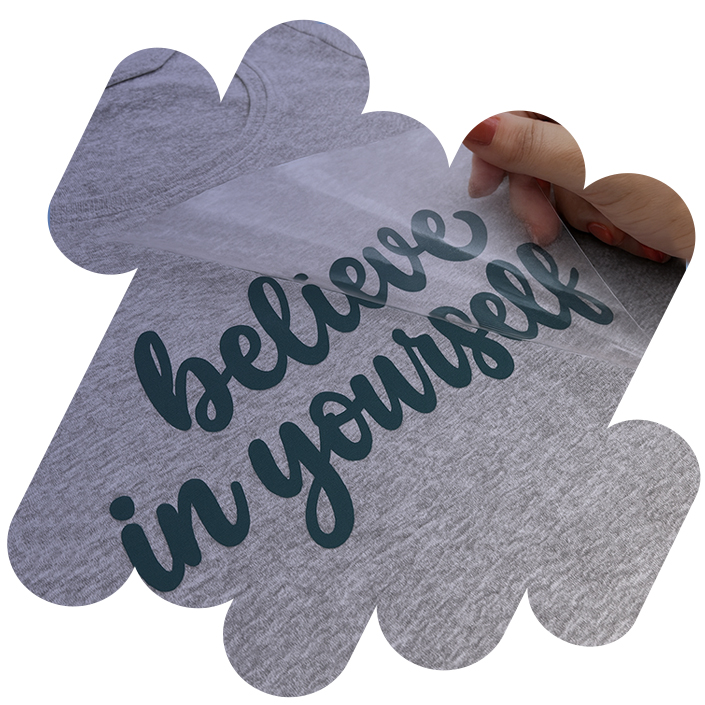
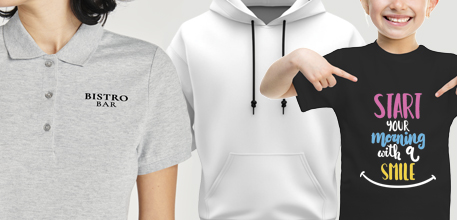
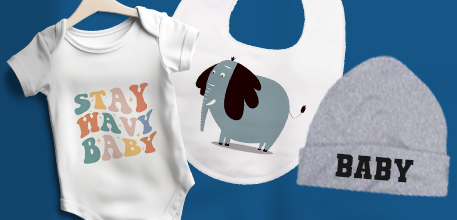
Print quality: sublimation delivers excellent photo-quality printing, with vivid colors and smooth gradients, making it ideal for complex designs. In contrast, heat transfer vinyl allows for solid colors and special finishes like glitter or reflective, although it doesn’t reproduce gradients.
Material compatibility: sublimation requires polyester surfaces or specially coated materials, which limits its use to specific fabrics and items. Heat transfer vinyl is more versatile and works on cotton, polyester, or blends without the need for prior treatment.
Durability: sublimation ink penetrates the fibers, so the image won’t crack or peel with use or washing. Properly applied heat transfer vinyl is also highly resistant, though it may show wear over time in high-friction areas.
Costs: sublimation involves investment in a dedicated printer, inks, and transfer paper, but offers very low cost per print for medium to large runs. Heat transfer vinyl has a slightly higher unit cost but requires less equipment, making it ideal for short runs or one-off customizations.
Print quality: heat transfer vinyl provides solid colors and special finishes such as metallic or reflective, but it is not suitable for gradients or photographic details. DTF (Direct to Film), on the other hand, reproduces complex images and smooth gradients with high color accuracy.
Material compatibility: heat transfer vinyl adheres mainly to fabrics like cotton, polyester, and blends, making it ideal for clothing and accessories. DTF offers greater versatility on textiles, even working well on fabrics with special coatings or difficult surfaces.
Durability: heat transfer vinyl is resistant to washing when properly applied, although it may lose some flexibility over time. DTF maintains vibrant colors after many washes, though its flexibility is slightly lower than that of some vinyls.
Costs: heat transfer vinyl is cost-effective for short runs and simple projects, with minimal material waste. DTF requires investment in a printer, curing oven, and consumables, but becomes more profitable for medium to large production due to its speed and efficiency.
Print quality: heat transfer vinyl allows for colourful designs and special finishes, while laser engraving uses no ink—it burns or removes layers of the material to achieve a precise and elegant finish, though limited to monochromatic effects or surface textures.
Material compatibility: heat transfer vinyl is applied to fabrics and soft accessories, whereas laser engraving is ideal for rigid or semi-rigid materials such as wood, metals, acrylics, leather or glass, expanding customization possibilities for decoration and gifts.
Durability: heat transfer vinyl holds up well to washing when applied properly, while laser engraving produces a permanent mark that is unaffected by use or cleaning, offering maximum durability for non-textile items.
Costs: customizing with heat transfer vinyl requires lower initial investment and is cost-effective for short runs, while laser engraving needs specialized equipment and tends to be more expensive, although it allows for high-precision production without recurring consumables.
Print quality: heat transfer vinyl delivers vibrant colours and special effects like glitter, neon or metallic finishes. UV DTF printing, on the other hand, stands out for its ultra-high definition, the option to add raised effects and spot varnish, achieving premium results that heat transfer vinyl cannot replicate.
Material application: while heat transfer vinyl is specifically designed for textiles such as cotton, polyester or blends, UV DTF can be applied to rigid surfaces like glass, wood, plastic, metal or ceramic, greatly expanding customization beyond clothing and textile accessories.
Durability: heat transfer vinyl holds up well to washing and frequent use when properly pressed and maintained. UV DTF, by contrast, offers excellent resistance to scratches, moisture and abrasion on rigid products, although it is not designed for machine washing like textile applications.
Costs: personalizing with heat transfer vinyl requires a lower initial investment and is highly accessible for short production runs. In contrast, UV DTF involves higher equipment and consumables costs, but delivers added value with visually impactful products and higher profit margins.
Print quality: heat transfer vinyl provides solid, uniform colours and allows special effects like neon, glitter or metallic finishes. Screen printing, on the other hand, is known for its excellent opacity and strong coverage with solid inks, although it is less versatile than vinyl for gradients or very fine details.
Material application: heat transfer vinyl is designed for garments and textiles, while screen printing can be applied not only on fabrics but also on rigid surfaces such as cardboard, paper, plastic or wood, expanding the range of printable materials.
Durability: both techniques offer good durability. Heat transfer vinyl withstands frequent washing if applied and cared for properly, while textile screen printing is highly valued for its long-lasting performance, especially when using high-quality inks.
Costs: customizing with heat transfer vinyl is cost-effective for small batches and personalised designs, as it doesn’t require screens or stencils. Screen printing, in contrast, has higher initial costs due to screen preparation but becomes highly profitable for large production runs thanks to its low unit cost.