1. Origin and evolution of direct-to-garment digital printing
The development of DTG printing (Direct to Garment) began in the late 1990s, driven by the need to reproduce full-color designs on fabrics without the technical and time limitations of traditional methods like screen printing or sublimation.
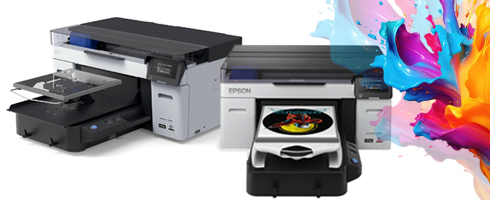
In its early days, DTG printing drew inspiration from inkjet technology adapted to work directly on textile surfaces. Manufacturers modified flatbed printers to accommodate T-shirts and other cotton items, incorporating water-based inks capable of penetrating fabric fibers.
Overcoming the limitations of classic techniques
Other methods offered good durability, but involved long and costly processes for small runs. While screen printing required separate screens for each color and design —increasing costs and slowing production—, sublimation was mainly limited to light-colored synthetic fabrics, restricting its use on cotton or dark garments.
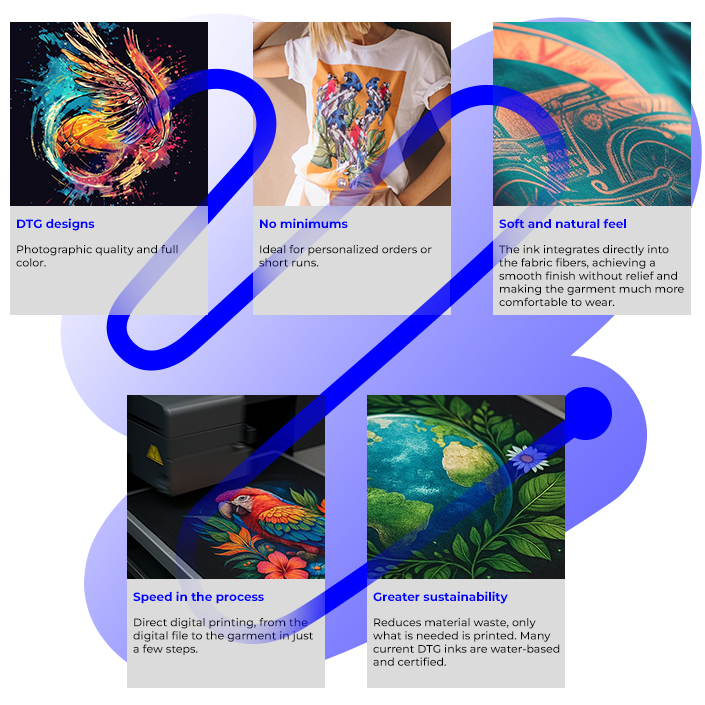
DTG overcame these barriers by allowing direct printing on cotton with high resolution and full color, making it easier to offer print-on-demand, short runs, and unique designs.
Evolution and growing popularity
Early DTG printers were slower and had limited fabric compatibility. Inks had issues with adhesion, absorption, and wash resistance. Over time, manufacturers improved ink formulas, developed more effective pretreatment systems, and upgraded printer hardware with advanced piezoelectric printheads and thermal or UV curing systems.
These advancements increased speed, efficiency, and print durability. Features like automatic pretreatment, compatibility with a wider range of garments and colors —including dark fabrics— and the use of more eco-friendly and durable inks also contributed to DTG’s growth.
Today, DTG printing is one of the most widely used techniques for customizing T-shirts, hoodies, and other cotton garments, especially for print-on-demand businesses, online stores, and brands looking to reproduce complex, photo-quality designs.