Shopping Cart
There are no more items in your cart


€21.90 Price excludes VAT
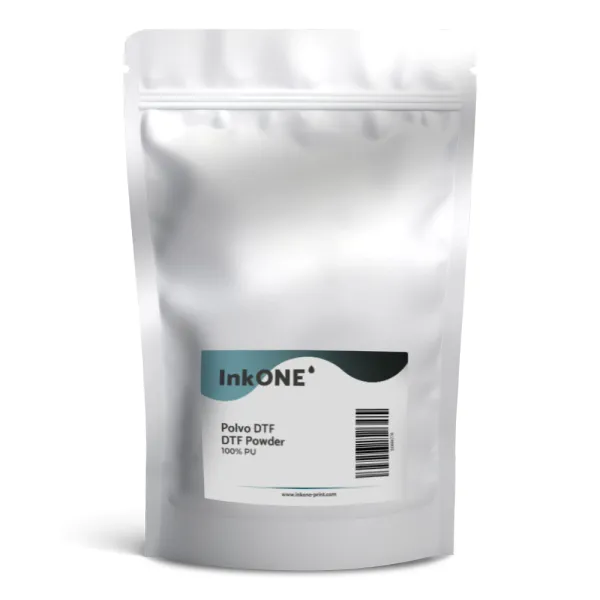
€26.50 Price includes VATWhite Polyurethane (PU) DTF Powder is composed of small particles, designed to adhere to the wet ink printed on the film, during the application of the DTF technique (Direct Transfer to Film).
Characteristics:
Polyurethane (PU) stands out for its elasticity, softness, and excellent resistance to water and washing. It is ideal for sportswear or garments that are used and washed frequently. Unlike polyamide, which is more rigid and less durable, polyurethane provides a flexible finish, soft touch, and professional appearance.
In summary, it is the most recommended material when looking for quality, durability, and comfort in every print.
| Characteristics | Polyurethane (PU) | Polyamide |
|---|---|---|
| Chemical composition | Urethane polymer with excellent flexibility and mechanical strength. | Amide polymer (such as nylon), with a more rigid and crystalline structure. |
| Elasticity | High, adapts to stretching without losing shape. | Medium, allows some bending but with less recovery. |
| Flexibility and touch | Soft, flexible, and pleasant to the touch. | Firmer, with a slightly rough texture. |
| Washing resistance | Excellent, maintains elasticity and color after many washes. | Good, but may deteriorate with frequent washing or high temperatures. |
| Adhesion | Good and flexible, ideal for elastic and high-wear fabrics. | Strong on static or rigid fabrics. |
| Water resistance | Very high, completely resistant to water and moisture. | Medium-high, may absorb some moisture. |
| Cost | Slightly higher, but with better performance and durability. | More economical. |
Application mode:
Once the printing is done with the special inks for DTF, they will remain wet for a few minutes. The transfer powder must be applied, covering the entire surface of the image, forming a thin layer that adheres to the wet ink.
The use of White Polyurethane (PU) DTF Powder is recommended for transfers that will be printed on light colored fabrics. If the white powder is used on dark colored garments, the edges of the design will be visible. For the same reason, black powder is suitable for dark or black fabrics.
The remaining powder can be shaken on a pan and put back in the container, or in a dry and closed container.
The sheet is then placed in the drying oven to harden the DTF powder, which will then allow the image to adhere to the fabric when printed.
It is recommended to apply the DTF powder away from the printer or other devices, as the remaining powder may cause damage to other devices.
Curing can be done with different temperature and time parameters, depending on whether you want to iron the image at the moment, or you want to store the transfer for later printing.